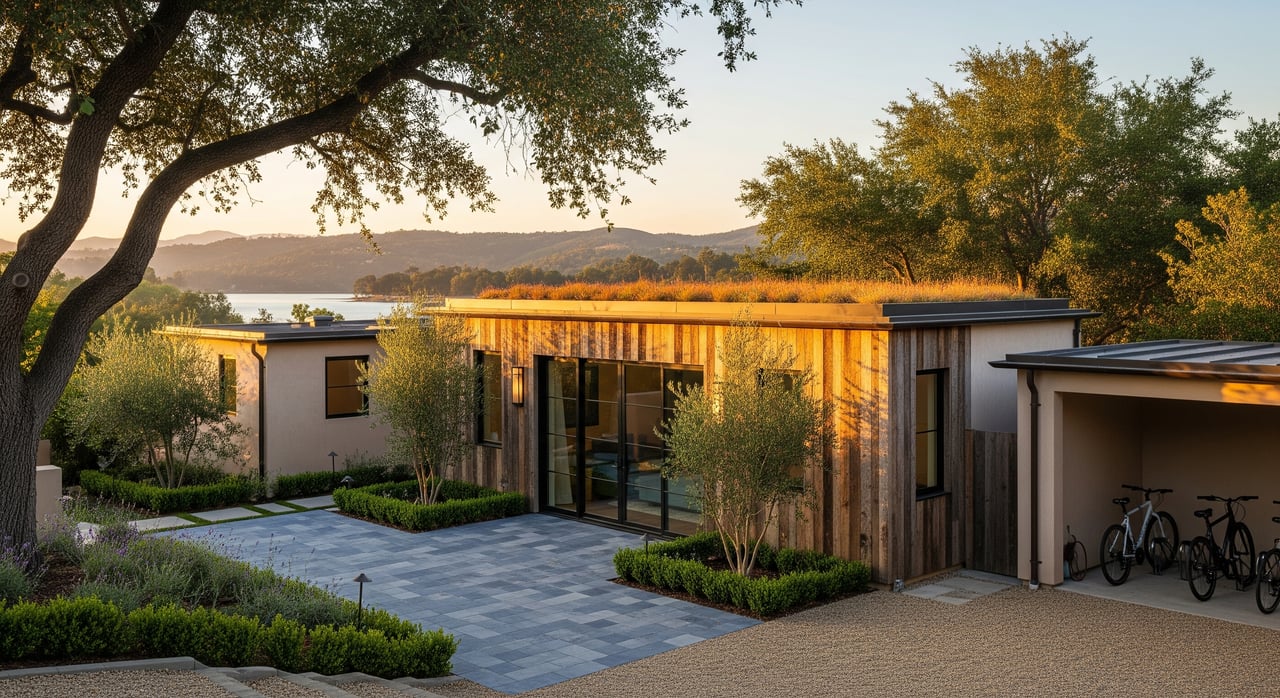
Thinking about adding an accessory dwelling unit to your Westlake Village property? Whether you want space for family, a private home office, or long-term rental income, an ADU can be a smart move. The challenge is that rules here can feel confusing because properties in and around Westlake Village are governed by different agencies. This guide breaks down how ADUs work, who to call first, what timelines and costs to expect, and the practical steps that keep your project on track. Let’s dive in.
What counts as an ADU
An accessory dwelling unit is a separate, self-contained living space on the same lot as a primary home. In Westlake Village and nearby communities, you’ll typically see four types:
- Attached ADU: an addition connected to your main home.
- Detached ADU: a small, separate structure in the yard.
- Conversion ADU: a garage, basement, attic, or other existing area converted to living space.
- Junior ADU (JADU): a smaller unit created within the footprint of the single-family home, often with more limited features.
California state law has made it easier to build ADUs, and it sets many minimum standards. Local jurisdictions still handle zoning, building permits, and objective design standards as long as they align with state law. That means your parcel’s governing agency will determine the exact process you follow.
Why jurisdiction matters here
Westlake Village sits at the edge of multiple planning and permitting jurisdictions. Your address might be inside the City of Westlake Village, in an adjacent city, or in unincorporated Ventura County or Los Angeles County. The rules and steps are similar but not identical, so confirming your parcel’s authority is the first move.
To verify your jurisdiction, check your parcel with the County Assessor or the city’s parcel lookup, or call the planning department and provide your street address or APN. Once you know who governs your lot, ask for the ADU handout or checklist so you can follow the right standards from day one.
Who to contact first
City of Westlake Village
If your property is inside city limits, start with the Planning and Building Division. Ask for the ADU intake packet, submittal checklist, and whether they offer pre-application review.
Ventura County (unincorporated areas)
If you are in an unincorporated area of Ventura County, contact the Ventura County Resource Management Agency, Planning Division. Request the ADU handout, current fee information, and any objective design standards.
Los Angeles County (unincorporated areas)
For parcels under Los Angeles County, reach out to the Department of Regional Planning and confirm the associated Building and Safety office for plan check and inspections.
Utilities and fire department
Ask your local water and sewer providers about capacity and connection requirements. If you are on septic, verify system capacity early. Check with the fire authority about access standards and whether sprinklers apply.
HOA or architectural review
If your neighborhood has CC&Rs, you will likely need HOA architectural approval in addition to city or county permits. Apply early so HOA review does not delay your schedule.
Common ADU rules to confirm
Local standards vary, but you can expect these topics to shape feasibility and cost. Always ask your governing agency for the current ADU handout.
Size and allowed types
Confirm the maximum size for detached, attached, and conversion ADUs, and whether JADUs are allowed. State law sets baseline allowances, but local limits may apply based on your zone and lot size.
Setbacks, height, and lot coverage
Detached ADUs often have different side and rear setbacks compared to the main house. Height limits and overall lot coverage or floor-area ratio may also apply. If you are converting an existing structure, different setback standards may apply.
Parking requirements and exemptions
State law limits when cities and counties can require new parking for ADUs, especially for conversion projects or locations near transit and in certain other conditions. Some jurisdictions still require one off-street space for certain detached ADUs if no exemption applies. Ask your planner how the rules apply to your site.
Owner-occupancy and rental rules
Recent state changes reduced or removed many owner-occupancy requirements, but local policy can vary. Confirm whether you must live on-site and ask about restrictions on short-term rentals so you plan accordingly.
Utilities and septic or sewer
If you are on septic, your system must support the added dwelling. Some sites need system upgrades or a sewer connection. Clarify water meter and electrical service requirements and whether capacity fees apply.
Design standards and compatibility
Even with ministerial approvals, many jurisdictions enforce objective design standards such as height, roof pitch, materials, and window placement. Ask for those standards up front to streamline design and review.
Special Westlake Village considerations
Many local parcels sit on sloped or hillside terrain. Grading, drainage, and foundation needs can add cost and time, and you may be asked for geotechnical reports. Planned communities often include open space protections or tree preservation standards that shape where you can build. CC&Rs and HOA design guidelines may be more restrictive than city or county rules, so factor both into your plan.
Timeline and cost reality
Every project is unique, but most homeowners should plan on months, not weeks. A typical pathway looks like this:
- Feasibility and pre-application research: 1 to 4 weeks.
- Design and permit preparation: 4 to 12 weeks for simple projects; 3 to 6 months or more for custom designs or hillside sites.
- Planning review for ADU: often 30 to 90 days after a complete application.
- Building plan check and permit issuance: 4 to 12 weeks depending on corrections.
- Construction: about 3 to 9 months for modest ADUs, longer with grading, complex foundations, or custom finishes.
- End to end: many projects finish in 6 to 12 months; complex sites can run 12 to 18 months or more.
Key cost drivers include project type, soils and foundation needs, utility upgrades, required reports, and finish level. As a broad reference, conversions often land in the lower five-figure to low six-figure range depending on scope. Detached new construction in the 400 to 1,200 square foot range is commonly in the low to mid six-figures, with wide variation based on site conditions and quality. Get multiple bids and include a contingency for hillside or utility surprises.
Step-by-step homeowner checklist
Follow this practical sequence to reduce rework and delays.
- Step 0: Confirm jurisdiction and parcel authority.
- Use your address or APN to verify whether the City of Westlake Village, Ventura County, or Los Angeles County governs your lot. Request the ADU intake packet.
- Step 1: Gather property basics.
- Note lot size, zoning, existing square footage, utility locations and type, slope or contours, easements, and any CC&Rs or HOA rules.
- Step 2: Schedule initial conversations.
- Call the planning counter for a pre-application meeting. Ask for the ADU handout, submittal checklist, and any pre-submittal review.
- Step 3: Run feasibility checks.
- Confirm allowed ADU types and maximum sizes in your zone. Review setbacks, height, lot coverage, design standards, and parking rules or exemptions. Verify sewer or septic capacity and water meter needs. Ask about owner-occupancy or rental rules.
- Step 4: Build your professional team and scope.
- Choose your ADU type and engage an architect or designer with local ADU experience. For sloped or hillside sites, schedule geotechnical and civil evaluations early.
- Step 5: Submit a complete application.
- Follow the checklist exactly. Include site plan, floor plans, elevations, grading and drainage if required, utility connections, and energy compliance documents.
- Step 6: Manage permits, construction, and inspections.
- Track plan check corrections and maintain HOA approvals. Schedule inspections as required. Confirm final occupancy and utility activation.
Avoid these common pitfalls
- Assuming city rules apply when your parcel is under county authority, or the other way around.
- Skipping HOA or CC&R approvals that are separate from city or county permits.
- Underestimating hillside costs for grading, retaining walls, and foundations.
- Overlooking sewer, septic, or water meter requirements and related fees.
- Submitting incomplete plans that trigger multiple correction cycles.
- Not confirming rental or short-term rental restrictions before you plan to rent.
How an ADU supports your long-term plan
An ADU can offer flexibility for multi-generational living, long-term rental income, and future resale appeal. The key is to design for code compliance, practical utility access, and neighborhood compatibility. A well-planned ADU can create options for you today and potential value for a future buyer, especially when you document permits, inspections, and approvals clearly.
Talk to a local expert
If you are weighing an ADU for lifestyle, rental income, or future resale, it helps to understand how your specific parcel, HOA, and jurisdiction fit together. Our team lives and works in the Conejo Valley, and we can help you think through timing, market impact, and your next housing step. When you are ready to discuss your options, reach out to McQueen & Associates for neighborly, professional guidance.
FAQs
What is an ADU vs. a JADU in Westlake Village?
- An ADU is a self-contained secondary dwelling on your lot, while a JADU is a smaller unit created within the existing home’s footprint with more limited features; confirm what your jurisdiction allows.
How do I find who permits my ADU in Westlake Village?
- Use your address or APN to confirm whether the City of Westlake Village, Ventura County, or Los Angeles County governs your parcel, then request the ADU handout from that planning office.
How big can my ADU be in Westlake Village?
- State law sets baseline allowances, but local limits can vary by zone and lot; ask your planning office for the current maximums and any rules for JADUs.
Do I need new parking for an ADU in Westlake Village?
- Many ADUs are exempt from new parking under state rules in specific scenarios, but local application varies, so request your jurisdiction’s ADU parking standards.
How long do ADU permits take around Westlake Village?
- After a complete submittal, planning review often takes 30 to 90 days and building plan check 4 to 12 weeks; total project timelines commonly run 6 to 12 months.
Can I rent out my ADU in Westlake Village?
- Long-term rental is common, but owner-occupancy and short-term rental rules differ by jurisdiction and HOA, so confirm current policies before you lease.