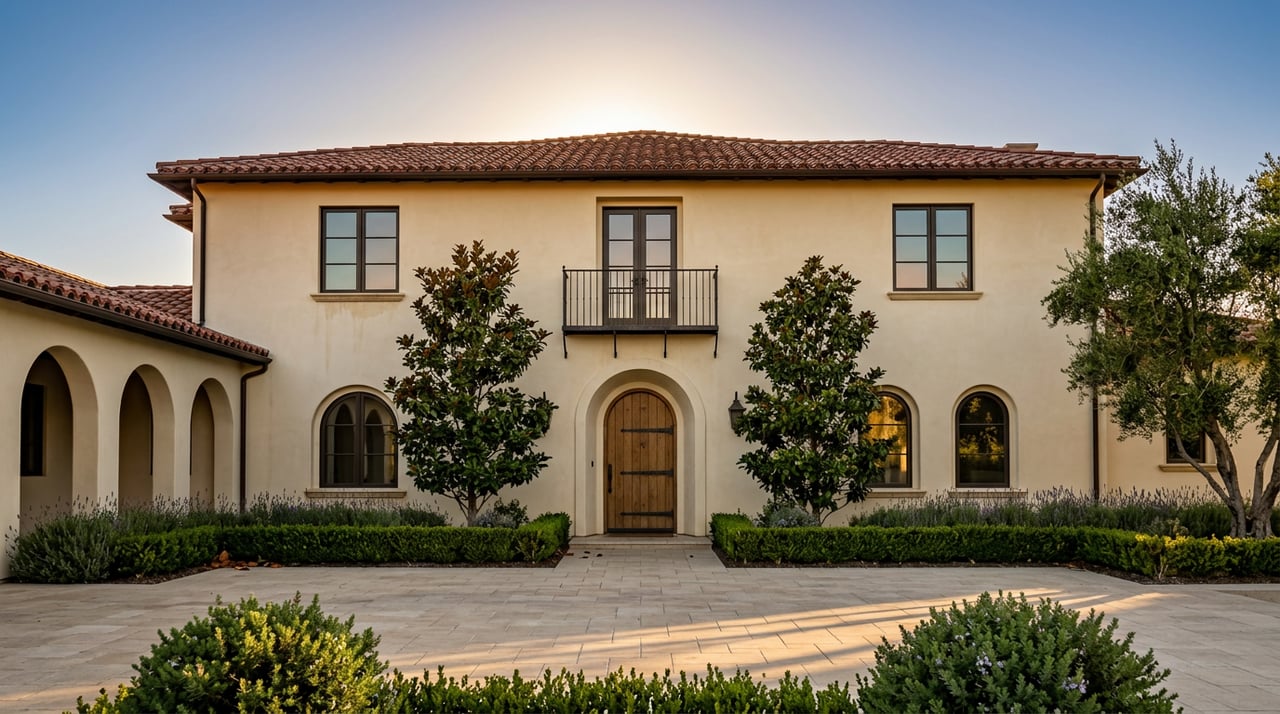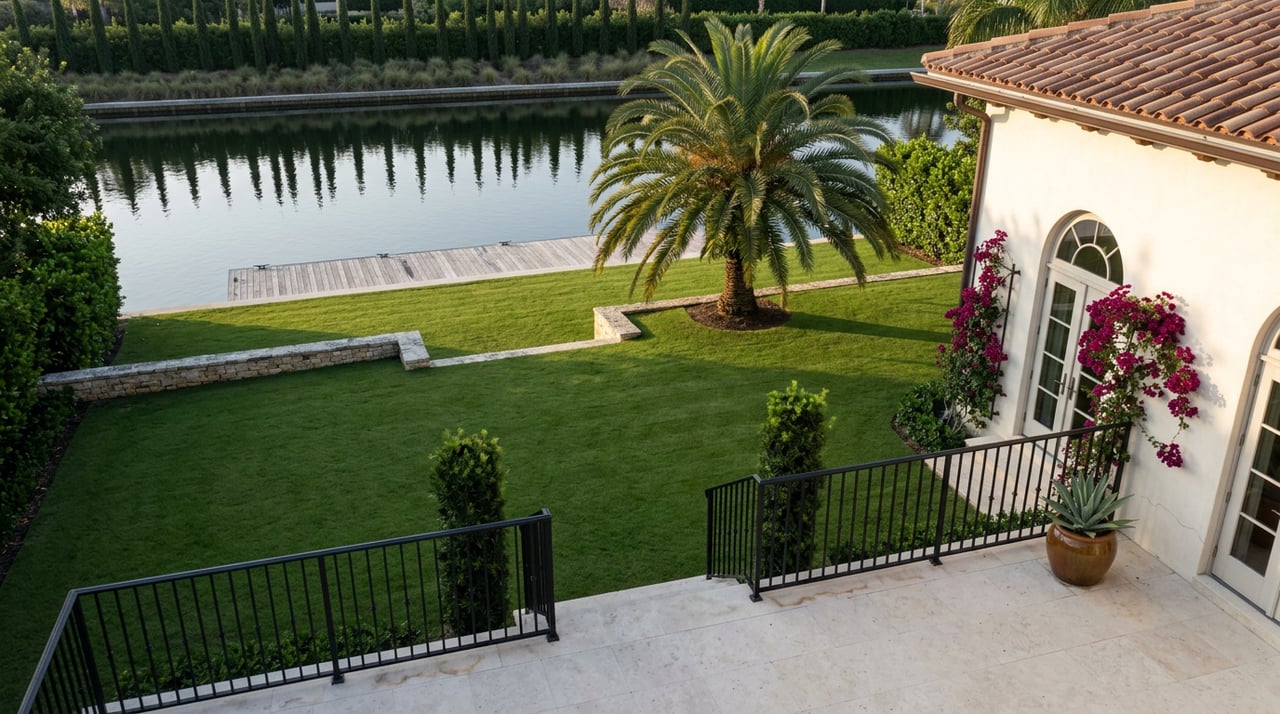
The listing photo shows the dock. The MLS description mentions "private dock rights." The asking price is built around it. Everything about the transaction tells a buyer that the dock belongs to the house the same way the roof or the driveway does.
It doesn't. On Westlake Lake, a dock is a permission slip issued by a private association, and that permission can lapse, get held up in review, or fail to transfer the way everyone assumed it would. The house rarely causes the delay that follows. The paperwork behind the water does, and it's the single biggest thing separating a clean lakefront escrow in Westlake Village from a stalled one.
The Photo Isn't the Permit
The Westlake Lake Management Association, known locally as WLMA, owns the lakebed, the dam, and the marina, and it sets the rules for everyone who touches the water. Dock construction, repair, and use all run through what WLMA's own rules call a Revocable License Agreement, not a deeded right attached to the parcel. When an owner sells, that license is supposed to pass automatically to the new owner, but only if the seller's account is in good standing under the community's CC&Rs at the time of transfer. If it isn't, the dock doesn't come with the house until the delinquency gets sorted out, and that sorting happens during escrow, not before the sign goes up.
This is easy to miss because nothing about the sale process flags it early. A dock reads like a fixture. It sits at the edge of the lot, it's priced into the offer, and most buyers don't think to ask whether the thing photographed in the listing is actually theirs to keep until someone pulls the WLMA file.
Where the Delay Actually Lands
Local transaction patterns tracked through the middle of 2026 show something worth paying attention to if you're timing a sale on Westlake Island or another lake-adjacent tract: roughly three of every five sales there run into a contingency extension, and most of those extensions trace back to HOA document review or a dock-related inspection finding, not to the house itself.
That's the part sellers underestimate. A buyer can love the layout, accept the price, and still need extra weeks once their agent requests the WLMA transfer confirmation and it turns up a lapsed permit, an unpermitted repair, or a dock that was never formally registered to begin with. None of that shows up on a home inspection. It shows up when someone finally asks the association directly, which is often later in escrow than anyone would like.
Two Bills on Different Calendars
Lakefront ownership here usually means paying into two separate systems, and the fact that they run on different schedules trips up more buyers than the dollar amounts do.
Your neighborhood HOA covers the things you'd expect: streets, gates, common landscaping, and in some communities a pool or clubhouse. Single-family dues for communities with limited amenities typically run from around $150 to $500 a month, climbing toward $1,000 or more in gated, lakeside, or full-amenity enclaves. That bill has nothing to do with the lake itself.
Lake access and dock use are billed separately through WLMA, and as of 2026 the association's published lake-use badges run $60 for an adult, $33 for a senior aged 62 or older, and $60 for a guest, on top of whatever dock or slip fees attach to a specific permit. Those charges are typically annual rather than monthly, so a buyer who budgets the HOA line and calls it done can be surprised months later when a separate invoice arrives on its own calendar. A household paying $400 a month in HOA dues and $600 a year in lake dues is really carrying about $450 a month once both are converted to the same unit, and that conversion is worth doing before you fall in love with a number that only tells half the story.
The Median That's Lying to You a Little
Zoom out and Westlake Village's broader market looks steady. As of June 2026, the estimated average home value across the city stood at $1,589,837, up a modest 2.8 percent year over year. That's the kind of number that suggests a calm, gradually appreciating suburb, and for most of the city, it is.
But look at the three months ending in May 2026 and the median sale price jumps to $1.8 million, up 35.9 percent year over year, on just 32 recorded sales that month. A swing that large on that few transactions isn't really a story about the whole city getting more expensive in a matter of months. It's a story about how thin the sales count is and how much a couple of premium closings can move a median when the pool is small. Lakefront and lake-access homes routinely price well above the citywide average, and when even one or two of them close in the same window as an otherwise ordinary month, they can pull the reported median far out of line with what a typical non-lakefront buyer will actually pay.
That distinction matters if you're comparing a lakefront listing to "the market" as reported on a portal. The portal number already has lakefront sales baked into it. You're not comparing lakefront to the median. You're comparing lakefront to itself.
| Segment | Typical recent price range | What's actually included |
|---|---|---|
| Non-lakefront, lake-adjacent | roughly $1.0M to $1.5M | HOA access, no dock, no WLMA lake-use obligation |
| Direct lakefront with dock or dock rights | roughly $1.5M to $3.0M | HOA dues plus separate WLMA badges and dock permit, contingent on transfer approval |
Why Scarcity, Not the View, Sets the Premium
WLMA manages the lake's public marina slips directly, and availability is limited enough that a waitlist is normal, not exceptional. Private, transferable docks are the exception rather than the rule, which is exactly why they carry the largest premium in the lakefront tier. A shared or non-transferable access right still adds real value, but it's a smaller bump than a dock that's confirmed to convey cleanly at closing.
That's worth sitting with. Buyers often assume they're paying for the water view. Mostly, they're paying for certainty, for a licensed, transferable slip in a system where slips are capped and demand for them isn't.
What the Lake Actually Allows
Part of what buyers are paying for is a specific kind of quiet. Powerboats on Westlake Lake are required to run on electric propulsion, and personal watercraft like jet skis are not permitted, which keeps the water calm enough for sunset cruises and small sailboats rather than open-throttle recreation. Fishing is allowed by permit, requires both a state license and a WLMA fishing badge, and is catch-and-release except for carp.
None of that is a limitation so much as a description of what the community actually is. Residents gather for dockside dinners at spots like The Landing Grill & Sushi Bar, and the Westlake Yacht Club anchors a fair amount of the lake's social calendar. It's a private, HOA-governed lifestyle built around structured access rather than open shoreline, and the license system that governs the dock is the same system that keeps the water this way. The paperwork and the peace and quiet are the same product.
Before You List, or Before You Write an Offer
- Confirm your dock's permit history with WLMA and check whether the account is currently in good standing.
- Ask for the HOA's most recent reserve study and see where funding sits relative to typical benchmarks.
- Get the two invoices, HOA and WLMA, side by side before comparing carrying costs to a non-lakefront property.
- If you're a seller, get ahead of a marine contractor inspection before the home goes live rather than after an offer arrives.
- If you're a buyer, request written WLMA confirmation of what specifically transfers, not just a verbal assurance from the seller.
A Few Direct Answers
Does a dock automatically come with a lakefront home in Westlake Village? Not automatically. Dock use runs through a WLMA Revocable License, and it transfers to a new owner only if the seller's account is in good standing at the time of sale.
Are HOA dues and lake dues the same bill? No. Your neighborhood HOA covers community upkeep and typically bills monthly. WLMA covers lake access, dock permits, and badges, and typically bills annually, often on a different schedule entirely.
Lakefront value in Westlake Village is real, but it's built on a permission system, not a deed, and the transactions that go smoothly are the ones where that permission was verified early instead of discovered in week five of escrow. If you're weighing a lakefront purchase or getting ready to list one, McQueen & Associates can walk the WLMA and HOA paperwork with you before you're locked into a timeline. Get Your Home Value and let's start with what actually transfers.